Telescopes
***AUSTRALIA'S PREMIUM TELESCOPE
IMPORTER & STOCKIST***
SHOP HOURS ARE 9am~4pm, MONDAY~FRIDAY.
********************************************

AUTHORISED CELESTRON DEALER
by TASCO SALES (AUST.) P/L
ANDREWS COMMUNICATIONS
Massive GSO shipment arrived!
***********************************************
MANY HUNDREDS OF
TELESCOPE PACKAGES & OTAs IN STOCK!
SKYWATCHER WAVE 100i MOUNT
IN STOCK! WAVE 150i IN STOCK!
***********************************************
SHOP NOTICE
ANDREWS
COMMUNICATIONS' NEW SHOP
LOCATION IS SITE 701, AERODROME ROAD,
CAMDEN AIRPORT, COBBITTY, NSW, 2570.
(Centre of airport, opposite Hangar 58)
EMAIL ADDRESS; radioandrews@hotmail.com
PHONE US ON 02 9636 9060, 02 9688 4301
OR 02 9896 8972 TO ORDER OR ENQUIRE...
Mail to; P.O. Box 10, Camden, NSW., 2570.
There is no mail service to Camden airport.
Startrack, etc., don't deliver to P.O. boxes
***********************************************
We can't guarantee delivery times. We don't personally deliver.
Please order by phone; 02 9636 9060, 9688 4301 or
9896 8972
or email;
radioandrews@hotmail.com.
Mail to;
P.O. Box 10,
Camden, N.S.W., 2570
| Telescopes, cameras and spotting scopes |
| Telescope accessories and eyepieces |
| Used, near-new & new telescopes, etc. |
YES, AMEX, MASTERCARD and VISACARD WELCOME HERE!
GENERAL COMPARISON OF ALL OUR DOBSONIAN TELESCOPES
AND NEWTONIAN OTAs IN STOCK vs. COMPETITORS' SIMILAR
MODELS IN STOCK SHOWS OUR FAR GREATER STOCK LEVELS!
We compared our current stocks of 6"~12" Dobsonian telescope
models and also 6"~12" Newtonian OTA models manufactured by
the major telescope manufacturers against four main competitors'
stocks of those models, as advertised by those competitors on
their respective websites. Amazingly, we found WE have over
TRIPLE the range of 6"~12" Dobsonian telescope models and
over DOUBLE the range of 6"~12" Newtonian OTA models in stock
than is advertised as being in stock by those four competitors!
Overall, we found we have IN STOCK a greater range of these
telescope models than all four competitors' stocks COMBINED!
Don't you be misled by others who claim to have many GSO
telescopes continually "ON BACKORDER" for years, as it's rare
that GSO places any of our ordered telescopes on backorder.
Maybe others can't afford to pay 100% cash for shipments?
Btw, we often have far more than one hundred
Skywatcher
and GSO Dobsonian telescopes in stock (as at 04-12-23)!
Please choose products carefully or firstly ask us re their
suitability, as lately we have noticed more customers are
ordering incorrect, non-matching or unsuitable products
for their applications and/or performance expectations.
YES, AMEX, MASTERCARD & VISACARD WELCOME HERE!
***********************************
We have over 100
Skywatcher
and GSO Dobsonians in stock!
We're quite likely to have the
Dobsonian you want in stock!
***********************************
Australia's genuine telescope experts!
Prices are subject to change due to exchange rate variations!
Free freight Aust-wide on amateur radios & scanning receivers.
We cannot guarantee delivery times. We don't personally deliver.
Please order by phone; 02 9688 4301/9636 9060/9896 8972,
by email;
radioandrews@hotmail.com
or by mail;
P.O. Box 240, Pendle Hill, NSW,
2145.
MANY HUNDREDS OF SKYWATCHER TELESCOPES IN STOCK!!!
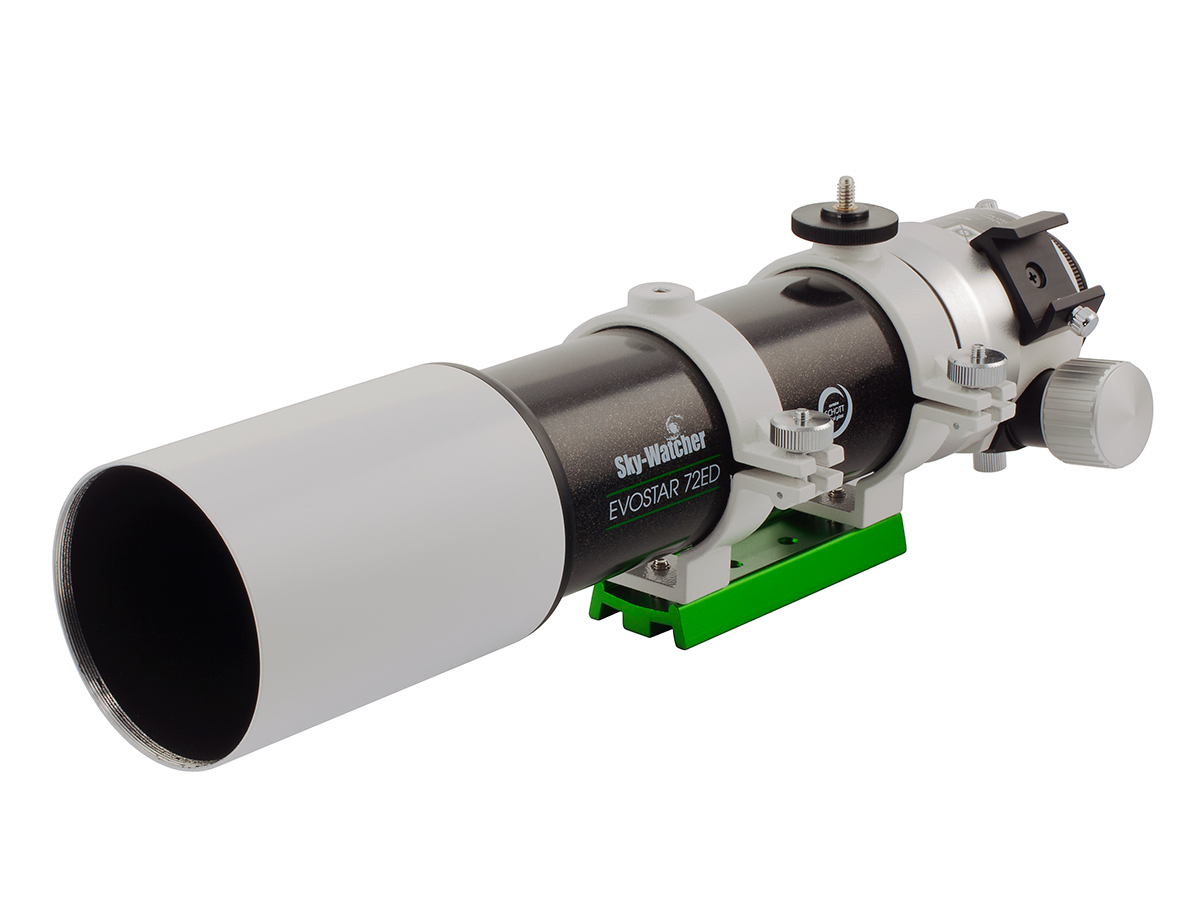
EVOSTAR ED72 ED refractor!
Multi-purpose! In stock!
Skywatcher 2001AP-OTA
Astrophotography-optimised
Newtonian reflector with dual
speed focuser! In stock!
We usually stock hundreds of telescopes and thousands of accessories!
Who else in Australia can supply such a massive selection from stock?
Selling, servicing and importing high-grade telescopes for 25+ years!
Almost all competitors seem to stock under HALF of the telescope
products which they advertise daily on their respective websites.
A Sydney competitor has <5% in stock of telescopes advertised.
We don't match overseas suppliers' prices, special offers, sales,
closeouts, etc., unless our suppliers offer us same/similar deals.
Most products ordered from us ship same day or the next day!
Why wait days, weeks, or months, for competitors to supply?
Did you know that a certain Sydney telescope supplier asked
an overseas telescope manufacturer last year if they could
initially part-pay for their telescope shipments as they
were
experiencing cash flow issues? Was that a sick joke?
YES,
AMEX, MASTERCARD and VISACARD WELCOME HERE!
Please choose products carefully or firstly ask us re their
suitability, as lately we have noticed more customers are
ordering incorrect, non-matching or unsuitable products
for their application and/or performance expectations.
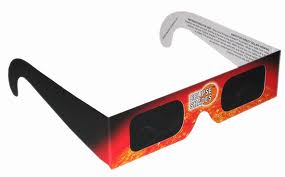
| ANDREWS Certified solar eclipse shades |
|
CERTIFIED SOLAR ECLIPSE SHADES AT
Not intended or designed for use with telescopes, binoculars, etc.
Children must be supervised at all times by a responsible adult |
|
NEW ASTRONOMY 2025 edition...A$39
This is the final edition of Astronomy according
**************************************** Small Chandler planisphere...A$15. Large Chandler planisphere...A$25.
Limited stock of Chandler planispheres.
****************************************
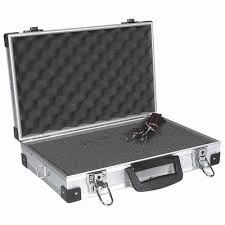
Medium sized aluminium eyepiece case...A$59. |
|
| Type | Price $(AUD) |
| ADM Vixen-to-Losmandy saddle adaptor; 1.75" wide to 3" wide dovetail | $199.00 |
| ADM Losmandy-to-Vixen saddle adaptor; 3" wide to 1.75" wide dovetail | $199.00 |
| ADM DSBS-V. One Vixen "V" and one Losmandy "D" saddle in a "side-by-side" combination on 15" long dovetail bar. Complete assembly | $349.00 In stock now! |
| ADM DSBS-DUAL. Two Vixen "V"/Losmandy"D" dual-saddles in "side-by-side" combination on 15" long dovetail bar. Complete assembly | $399.00 In stock now! |
| Assorted T-ring camera adaptors | from $29.00 ea. |
| Barlow lens, 1.25" achromatic 2x magnification (long type) | Only $19.00 |
| Barlow lens, 2" achromatic 2x magnification | $49.00 |
| BC&F Adap-T F1 (AC531) T-threaded adaptor ring for FUJI digital cameras - made in England | $59.00 |
| BINOCAM Binoculars (8 x 22) with integrated digital camera! | $99.00 |
| Camera adaptor - new adjustable tube type! | $49.00 |
| Canon EOS type T-ring adaptor | $39.00 |
| Crayford style focuser - includes base for use with 8" Newtonians | $79.00 |
| Diagonal, 2" mirror type, push-in. Not for SCTs. Not erect image. |
$49.00 Limited stock |
| Eyepiece case, aluminium, medium-sized briefcase (holds 9 e/p) | $59.00 |
| FOCUSER. GSO. High quality smooth operation rack and pinion type. Suits 70~80mm refractors with 86mm i.d. optical tube | $49.00 Limited stock |
| Grey plastic padded carry cases - to store a laser pointer and batteries | $1.00 ea. |
| Laser collimator - All-new adjustable brightness type! | $69.00 |
| Nikon type T-ring adaptor | $39.00 |
| Planisphere, small | $12.00 |
| Planisphere, large | $19.00 |
| Red light torch, "SWLIGHT" | $10.00 |
| Red dot finder scope, 30mm dia., Guan Sheng | $29.00 |
| SCT Diagonal, 2" - outstanding value! | $69.00 |
| VIXEN Digital camera adaptor DG-LV #3902 - made in Japan | $39.00 |
| Limited or no stock of some discontinued accessories | |
| Prices are subject to change due to exchange rate variations | Check with us |

We are authorised dealers. by local
or factory-direct suppliers,
for Ba'ader, Bosma,
Bresser, Bushnell, Celestron, Guan Sheng
Optical, Long Perng, Lunt Solar Systems, Meade Instruments,
Saxon, Skywatcher,
William Optics and many other brands...
We have more stock than any other specialist telescope dealer
in Australia, for you...with immediate delivery on most models!
If you intend using an imager/camera
with your computer then
you may
need an "application" or "emulator"
if your computer's operating
system is later than Windows XP, e.g. Windows 7 or 8.
Please order by phone; 02 9688 4301/9636 9060/9896 8972,
by
fax; 02 96881995, by email;
radioandrews@hotmail.com
or by mail; P.O. Box 240, Pendle Hill, NSW,
2145.
Trading hours are 9:30am to 4:45pm, Monday to Friday.
REFRACTOR BASICS
A single objective lens is the most basic lens for a refracting telescope.
Most refractors have a "compound" (two lenses grouped together) objective
lens and these will provide improved image quality with reduced optical
aberrations (e.g. chromatic aberration, in particular) when compared to a cheap single lens
refractor.
A "doublet" lens cell refractor has two objective lenses, which are normally air-spaced. A doublet refractor performs better than a compound lens refractor.
A "triplet" lens cell refractor has three objective lens,
which are normally air-spaced.
A triplet refractor is
generally regarded as the best lens system for a refractor, although there
are quadruplet (4 lenses) and quintuplet (5 lenses) refractors, too.
"ED" means "extra-low dispersion" of light. ED lenses reduce light
scattering, resulting in improved contrast.
There are several grades of ED lenses - the best being FPL-53 which is the highest grade of fluorite ED lens. FPL-51 is a more common, slightly lower grade, but lower cost ED lens. Incorporating an ED lens into a triplet lens design is generally regarded as providing the best possible optical performance in a refractor, at reasonable cost.
APO = apochromatic = colour free.
OTA = optical tube assembly.
Magnification may be calculated simply by dividing the focal length of the telescope by the focal length of the actual eyepiece in use.
E.g. a telescope with a focal length of 900mm fitted with an eyepiece of
10mm will deliver a magnification factor of 90x. In this example, adding a 2x Barlow
lens will double magnification to 180x.
A Barlow lens effectively reduces the focal length of the eyepiece in use,
therefore increasing the magnification. Barlow lenses can reduce some
optical aberrations. Barlow lens have negative optical characteristics. They
act similarly to a magnifying lens. Telescopes have positive optical
characteristics.
The maximum recommended/advisable/useable magnification for most telescopes is generally regarded as being double the aperture (in mm). E.g. a telecope of 100mm aperture would have a maximum recommended magnification level of about 200x.
Low quality telescopes often advertise high magnification levels on their boxes - beware of them! Generally speaking, the higher magnification printed, the lower the quality of the telescope. Often, the first thing to throw away is the Barlow lens...
Please keep in mind that the customer is responsible
for freight costs both ways
when sending warranty claim items back to us.
NOTES REGARDING OPTICAL TUBES AND TUBE RINGS
ALL telescopes we sell do NOT have rotatable OTAs (Optical Tube Assemblies)! In fact, very few mass produced telescopes have rotatable OTAs. There are some custom-made and home-made telescopes (usually large Dobsonians made in the USA which have wooden bases) that have rotatable OTAs.
We do sell high-grade refracting telescopes which have rotatable FOCUSERS
fitted. These are mostly models from William Optics and Long Perng in
Taiwan.
Please note that tube rings are NOT normally designed or intended to be
loosened to allow OTAs to be repeatedly or continually rotated.
SHIPPING AND INSURANCE NOTES
Insurance cover for goods in transit is available from us for only $2 per $100 value of goods.
Please advise us if you require this option when ordering.
Insurance cover for goods despatched overseas costs A$5 per A$100 value.
Please consider insurance because we are not responsible for loss of
parcels or damage sustained by parcels as the carrier is responsible! We
do pack well!
If your order (e.g. telescope or binocular) is damaged in-transit by the
freight company then you must claim on the freight company, not
ourselves!!
Of course, if you have paid us for insurance then you simply claim on
us. We are quick at resolving damage claims, compared to most freight
companies. We are not a freight company, of course.
Please do NOT write <fragile> on anything you send to us as
doing so greatly increases the risk of damage. Please try to "double-box"
all items sent to us.
Our freight rates are cheaper than competitors' so-called super cheap rates!! Please keep in mind that the customer is responsible for freight costs both ways when sending warranty claim items back to us.
We always report to the ACCC those competitors who practice resale price
maintenance.
We will never, ever, accept being treated poorly due to our super
discounting!
Compliments recently received
"Hi Luke,
A quick but heartfelt "Thank You" on behalf of myself
and the rest of the astronomical community of Australia for keeping the
prices real, and for shaping the entire industry in this country into what
it is today!
(Next reply from Steve follows...)
Thanks for your
swift reply and thanks for going the extra mile in finding Saintech and
their phone number. This is just another example of what makes you guys so
awesome. You can tell Lee that if he wants to quote my comments praising
you all please go ahead, I would be proud. Steve D".
(Both replies
received from Steve by email on 19-01-17)
*******************************************************
"Dear Lee,
I recently purchased a 8 inch GSO Dobsonian from your store and I wanted
to provide feedback regarding Luke and the team's exceptional service.
After bothering Luke for advice on-and-off over the past few months I
finally ordered the scope last Monday. The Dob arrived the next day,
100% collimated - yes, I had put it out of focus to double-check - and
ready to use...and what a scope it is, MINDBLOWING quality for the
price!!!!
Please accept my thanks to the team. I have been buying gear and recommending Andrews to others over the years, and I intend to continue doing this".
Sincerely,
Adrian. (Received by email 25-06-14).
*******************************************************
"Telescope arrived yesterday in perfect condition
It is now seated on my Losmandy Gemini II (where the 8 inch Newtonian
used to seat) Thanks a million for the great service and ultra fast
delivery
From my part, I will be spreading the good word around the west
Australian astronomical club
Once again, thanks a million"
Regards
John.
(Regarding new Celestron 14" OTA SCT. Email received 14-02-14).
*******************************************************
"Thank you for the Binoviewers that I ordered on Friday. They arrived today
(Monday).
Absolutely excellent service. I will be trying them out this week".
Max. (Received 07-05-12 by email).
*******************************************************
"Hi Luke and everyone,
I just wanted to write and say thank you for your help. I've bought
several things from you and I'm happy with the products and service -
you guys are great. I'll be in contact soon. Want to put the money
together for a guide scope and guide cam. Once again - thanks for
everything.
Very happy customer".
Mike. (Received 10-12-11 by email).
*******************************************************
"Dear Lee and staff: Just a quick note of appreciation. I have been buying
both amateur radio equipment, and lately, astronomical equipment from
Andrews for a number of years now. I have always been impressed with
your business ethic, the high levels of service, and of course, the
inherent competitiveness of "Andrews Communication Systems". My latest
purchase of a Guan Sheng RC8, has proved to be an absolutely phenomenal
piece of optical engineering, and even if I tried I simply couldn't
fault it. With kindest regards. Looking forward to doing further
business with you".
John Green VK2NIX. (Received 11-11-11 by email).
*******************************************************
"Many thanks for the fantastic and efficient customer service your company
provided on the purchase of my telescope. A lot of businesses could
certainly take a few tips on good salesmanship that your store provided.
Again, many thanks".
Robert M. (Received 22-11-10 by postcard).
*******************************************************
"My name is Adam, I recently ordered yet another piece of
equipment from your company, and it arrived today.
I was greatly satisfied with the result. Quick Shipping, Professional
Staff. What more could I ask for! Your staff member Luke even took the
time to call me back, when the stock I was seeking was back in store.
This was very much appreciated! I have no problems whatsoever
recommending your company to anyone who enquires!
And I will be sure to shop with you again, when the need arises.
So until my next order,
Regards, - Adam". (Received 19-11-10 by email).
*******************************************************
We receive many compliments annually and publish some from time to time.
Updated 26-08-19.
Lee's blog!
We offer our technical expertise to those
who purchase products from us and from elsewhere. Our optical manager, Luke,
has a Bachelor of Astronomy and Space Sciences - and a Master of Science!
Our staff has excellent tertiary qualifications.
Does your telescope supplier have such qualified and also well-proven expertise?
We import and support high quality products at often the best prices in
Australia.
Interestingly, we're finding more and more long-term
astronomers are turning to us
as their preferred supplier, after becoming increasingly frustrated when
trying to
obtain product within short time frames and fair prices from local
competitors.
Please ensure you initially aim your computerised telescope at the horizon. Aiming it up at the zenith will make it more difficult for its computer to align correctly.
We continually export to New
Zealand and many other countries and, in fact, have sold our goods in New Zealand
personally by regularly visiting many field days there! We also have a truly
outstanding New Zealand agent. We offer genuinely friendly and helpful service
to all!
Due to our New Zealand agent helping us at every opportunity,
we paid for him to fly to Hong Kong several times. We were also happy to
pay for our valued employees
to fly to Hong Kong and Macau, after 5
years of faithful service. We were happy to pay for them to fly to Japan
early in 2016, after another 5 years of faithful service! We also flew them
to Singapore for a holiday in August, 2019. We trust that all our competitors'
employees also enjoy similar benefits! If not, demand those benefits!
We are not some backyard dealer, unlike three telescope dealers located in Victoria,
South Australia & Queensland who operate from their backyard garages! One
of them is under the sad delusion that because he operates from a garage
he
automatically knows more than all telescope shops and their staff throughout
Australia!! Incredible! Since we started importing telescopes & accessories
we have forced many telescopes down to 1/3rd...and accessories down to
1/5th...of their pre-Andrews levels!
We operate from a shop and have done so continuously since 1976.
We are genuine telescope experts! We sell thousands of telescopes and accessories annually
and have the largest stocks of any specialist telescope shop in
Australia! Our telescope and accessory prices are most often the lowest
in Australia, too! We shocked many telescope competitors when we
started importing, selling and servicing telescopes,
accessories, etc., as we applied our excellent and well-proven
repair servicing from decades of supporting highly sophisticated
amateur radios onto telescope products.
It took lethargic telescope competitors many years to improve their repair
service!
Those lethargic competitors were forced by their own customers to compete,
hi!
Yes, it was, decades ago, a true "old boys" club for high prices and poor
service!
In fact, around 90% of those original telescope shops have vanished! They
couldn't,
or wouldn't, compete on price, service, stock levels, technical knowledge,
etc.
A certain Melbourne
competitor has been forced to remove "In stock" from almost
all of their website listed telescope products, as those listed products were
proven
to NOT actually be in stock in their shop/warehouses. Is that dodgy, or
what?
Most of our competitors are simply too greedy or too scared to compete
against us.
Dealers cannot legitimately claim that suppliers' stocks are their own
stocks.
Dealers must possess their own stock when claiming products are in
stock!
We have been in business
for over 48 years and have our own excellent Australian in-house warranty
service provided by our highly qualified and skilled technicians on
most products we sell. We are also
fully authorised importers, distributors and dealers for many, many brands and
products we sell. Yes, we are responsible for reducing many models of
telescopes to around one-third (1/3rd) of previous high pricing!!!
We are also responsible for reducing most accessories' pricing to one-fifth
(1/5th)!! Thanks to our outstanding history of importing to the
maximum and our excellent technical knowledge, you can shop with confidence
at Andrews Communications!!
Andrews Communications Systems
Site 701, Aerodrome Road, Camden
airport, Cobbitty, N.S.W., 2570.
Phone 02 9636 9060, 02 9688 4301, 02 9896 8972.